If you’re after a new camera …

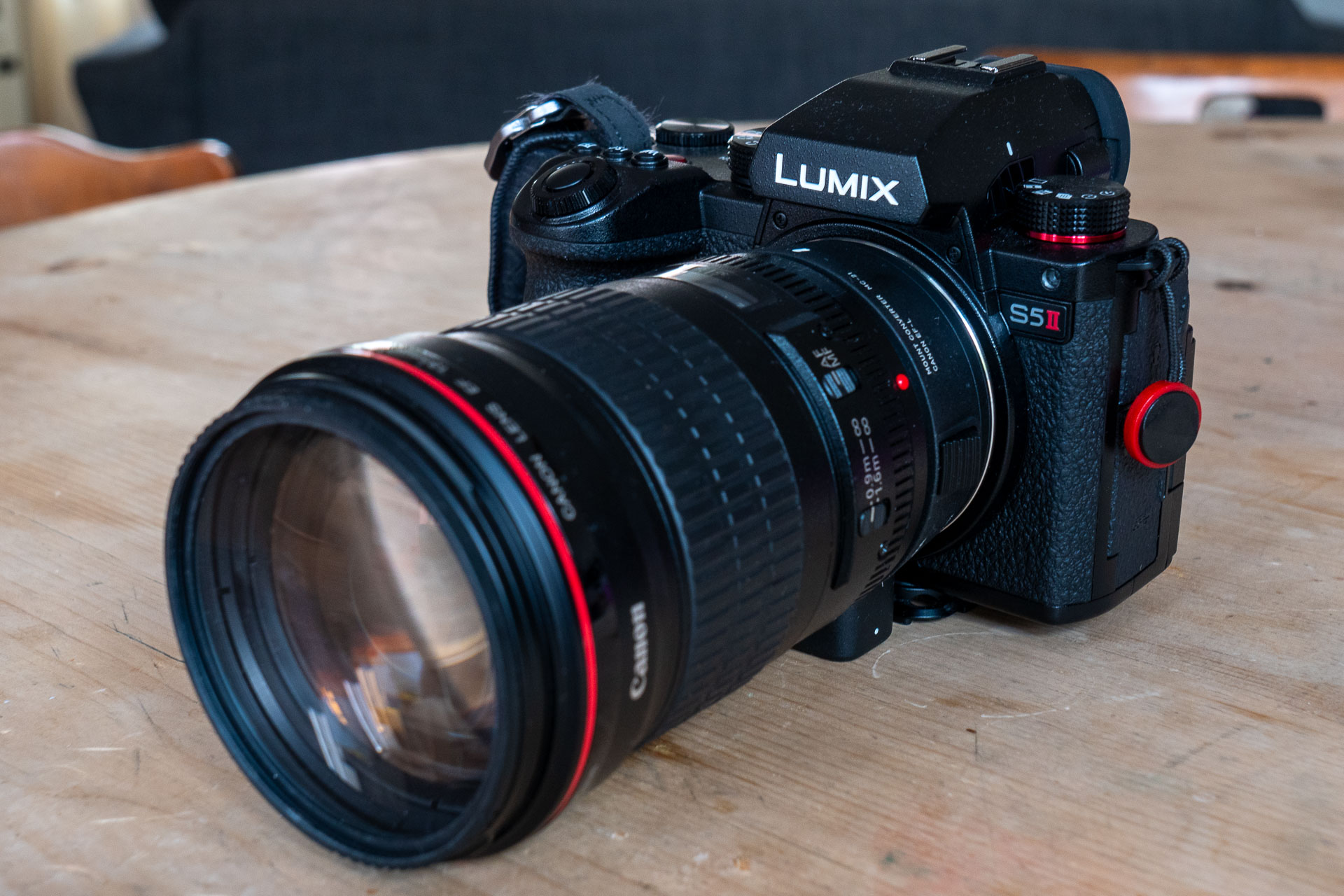
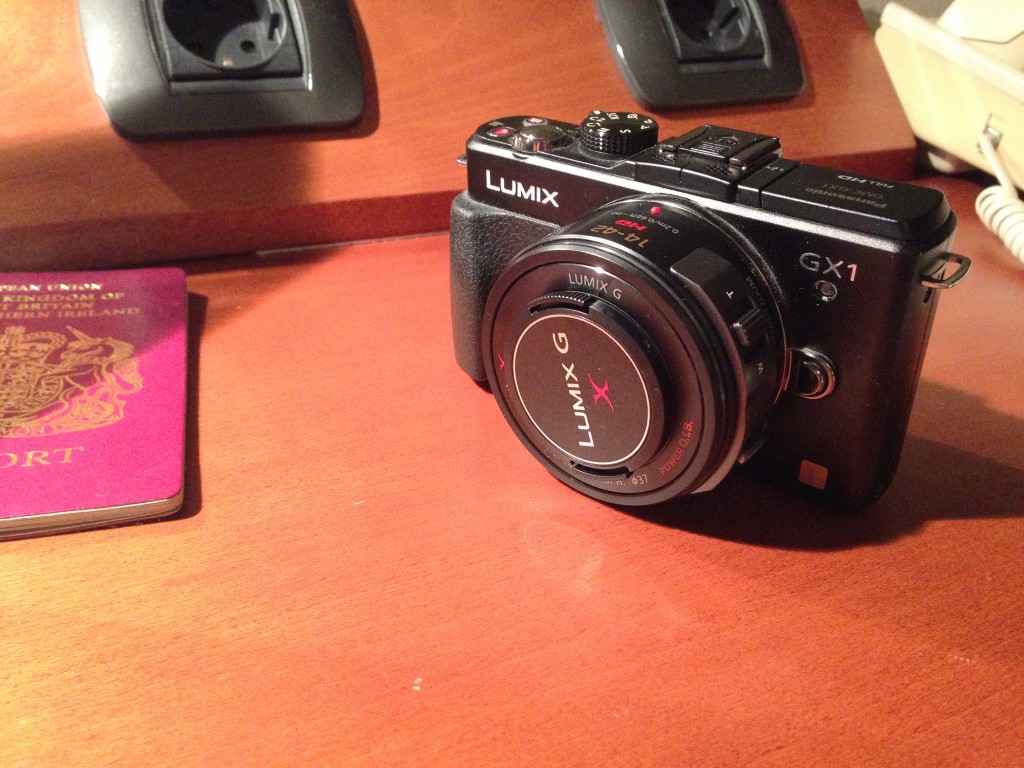
… the Panasonic GF1 is quite a bargain at the moment at $990 NZD for the 14-45mm kit. In the UK it is just £329 (with £50 cashback), which at the current exchange rate is even cheaper.

The G1′s successor (G2) was recently released, which adds movie mode, a touch screen and a few minor improvements. When it comes to taking photos though, the two are almost indistinguishable.

The G2 however has an inferior kit lens (14-42mm, the better old one is 14-45mm), and costs $500 NZD more than the G1, which now costs about the same as the new “budget” model, the G10.

The G10 does have a basic movie mode, but loses the high resolution viewfinder and articulated screen. It too has the inferior 14-42mm lens, which in my view makes the G1 the better buy unless you absolutely must have movie mode. But if movie mode is important you really want a GH1 or G2 anyway (possibly GF1).

dpreview.com’s review of the G2 should tell you all you need to know. :)

Me though, I’ll be sticking with my 40D and Canon lens collection, plus the S90 for situations where a big camera is inconvenient (the S90 is by far the best compact I’ve ever used). I think the GF1 is the really interesting model in the Panasonic range as it realises the potential of the micro four thirds system – a big sensor in a small package. The problem however, is that a MFT (micro four thirds) camera can’t replace a compact because they’re all still too big to fit in a trouser pocket with a standard zoom.

I really don’t want to own 3 expensive cameras comprising two unique lens and accessory systems, so therefore a MFT camera would have to replace the DSLR. And the MFT system to date can not match the dynamic range and lens selection of the Canon EOS line. So for now I’ll stick with 40D + S90, with my most likely upgrade path to be a 5D MKII and/or 600D when the 40D starts to show its age (which it certainly isn’t yet).

The S90 may have cost a lot, at the time it was almost twice as much as a perfectly good compact like the Fuji F200EXR. But you’ll notice that its price hasn’t dropped at all since its introduction which to me indicates that demand is still high, and I think it was worth every penny.

So to put things in perspective, the S90 costs more than the G1 in the UK after the rebate, and if you don’t mind the larger size of the G1 it’s not difficult to see which is the better value!

Holiday Snaps

The holidays are over, I’m back to work but clearly the news reporters aren’t as stuff and the TV news are full of garbage. At least there’s photo processing to keep me occupied!

Through experimentation I’ve been learning a few tricks on processing raw photos with Canon’s Digital Photo professional – I won’t make the same mistake of promising an article on using it but it’s in the back of my mind…

Anyway here are a few photographic highlights:

Anchor

Foxdown Dusk

Wellington Waterfront

Third Party Lens Hoods

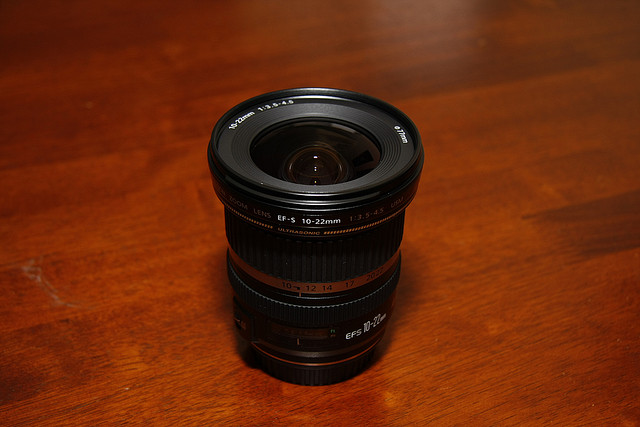
What’s the difference between Canon lens hoods and the third party hoods that sell for much less on auction sites such as trademe and ebay? I couldn’t find the answer to this question anywhere else, so when shopping for a hood for my Canon 10-22mm lens I decided to go for a third party hood and find out.

The genuine example I have is a Canon EW-73B lens hood. It sells for $66 NZD on photo.co.nz, whose prices are generally in line with the current retail market while not being the absolute lowest. This is an exorbitant price for what amounts to little more than a piece of plastic. The third party equivalent sells on trademe for around $25 NZD, much cheaper but hardly a bargain. So what’s the difference? Well effectively you’re paying $39 for the brand and felt on the inside of the hood. And perhaps slightly better quality plastic as well.

The third party example is an EW-83E. Ideally I’d purchase a third party EW-73B to compare, but the images online tell me enough that I don’t need to – they’re exactly the same as the EW-83E I have aside from the size and shape. Below is a picture that illustrates what I see as the major difference between third party and branded hoods:

Third Party Lens Hoods

As you can see there is a notable difference in the reflectiveness of the inside surface. Admittedly my hand in this photo is partly shielding the Canon hood, so I took another shot for the skeptics: here. But it’s not difficult to imagine how a smooth surface would reflect more light than black felt.

The question is whether this actually makes any difference to your photos. We know that light refracted in the lens can reduce colour saturation and cause flare (see the digital picture’s write-up on the use of lens hoods for more info), however answering the question of whether light reflected from the inside of the hood and then onto the lens can do the same is more difficult to answer (if anyone wants to shout me a third party EW-73B I’ll do my best to find out!).

At minimum the effect of using a third party hood should still be reduced flare and better colour saturation (vs not using any hood at all), so a photographic scenario that demonstrated a perceivable difference would probably have to be carefully designed. Maybe a flash just off the frame but pointing straight at the lens would do it.

Conclusion

Both third and first party lens hoods are a ripoff.

ThinkTank “Urban Disguise 70″ Buyer Review

I’m not in the habit of reviewing everything I buy, but it does give me something to post. I picked this up from Progear in Newmarket for $219 (NZD), so it’s not a cheap bag but not absurdly expensive either. Note that I did actually purchase this with my own money and buyers are never totally impartial, but I’m certainly not being sponsored by the manufacturer/distributor/retailer either!

The last bag I bought to hold all my gear (a backpack from trademe) cost $79, so it was a cheapie but excellent value for money, more so than this (since the Urban Disguise 70 cost me 2.5x as much). This time around I wanted something that was durable, looked nice but didn’t scream “camera bag!”. And this seemed to fit the bill.

First a shot of the bag and the gear I have to fit inside. It’s a fairly modest kit, small enough that I can carry everything most places:
Urban Disguise 70

Like most bags aimed at photographers the internal layout is completely re-arrangeable, and a good number of spacers are included. This pic shows how I’ve laid out mine (albeit not very well as the zipper doesn’t allow it to open very wide):
Urban Disguise 70

The bag has a generous number of pockets. This is one of the side pockets where I chose to store a couple of filters:
Urban Disguise 70

This next photo shows the pouch which holds the rain cover:
Urban Disguise 70

However this is one feature that I can’t really see myself using. Here’s the bag with the rain cover on:
Urban Disguise 70

Unless you’re in the habit of leaving your camera bag outside on a rainy day, or don’t mind carrying it like a cardboard box, this is a rather useless feature in my opinion. But it does add a bullet point to the marketing materials. If I ever use it I will be sure to update the review!

Update: As noted in the comments below, you can actually use the rain cover if you attach the strap to the clips on the “back” of the bag rather than the sides. Maybe I will use it after all.

Also included is a memory card wallet which attaches to the bag via a velcro ribbon:
Urban Disguise 70

There have been a couple of times when I’ve been concerned about memory cards slipping out of my old bag, so I think this is a great idea. It’s one of those nice extra touches that really makes this a photographers bag, and wasn’t something I was expecting to find (or had even considered). It’s a shame about the gaudy colour though, and the bright blue ribbon it attaches to makes it worse (what’s wrong with gray/black?).

Finally a shot with all my gear inside:
Urban Disguise 70

As you can see it’s a comfortable fit. The DSLR has a 10-22mm lens mounted with its hood facing outwards and there’s heaps of room. It also fits with the 70-200 on and hood reversed. I could comfortably fit another medium-large sized lens or another body, but probably not both.

You may have noticed that you can’t see much of the gear that’s either side of the DSLR (the 70-200 and flash are on the right and the 17-85 and 50 are on the left). Due to the narrow opening they aren’t that easy to access either. I could possibly remedy this by putting the DSLR on one side, but then the camera would be harder to access which somewhat defeats the point. To be fair, allowing a wider opening would compromise the look of the bag somewhat, and it’s only an inconvenience when I want to change lenses and quick access isn’t very important.

Conclusion

This is a sharp looking but understated bag that is very well made. It blends in well and is a perfect size for my needs, so I’m happy with the purchase.

Pros

  • Good quality materials and construction

  • Plenty of pockets and spacers
  • Holds a good amount of gear
  • Doesn’t look like a camera bag

Cons

  • A little pricey, but not exorbitant

  • Narrow zipper opening makes gear on the sides hard to access
  • Rain cover has questionable utility value
  • Dorky name, but it describes the mandate well

For more info see the manufacturer’s site.

Armistice Day Celebrations in Cambridge (NZ)


Over the weekend I attended a family reunion of sorts in Cambridge. Cambridge celebrates armistice day in emphatic style with a remembrance ceremony at the town hall, and a military show that runs two days.

My camera had shot over 600 frames by the end of the weekend, which left quite a few photos to sort out and process. In the end I came out with 40 decent shots.

The final set is here.

For more information about Armistice in Cambridge, visit armisticeincambridge.co.nz.

Camera News

I doubt you’re reading this blog for the news, but there have been some recent announcements that will be of interest if you have more than a passing interest in photography.

  • The Canon EOS 7D looks like a nice step up from the 50D. It packs 18MP, so it will be interesting to see what the high-iso shots are like. Since Canon is apparently expanding its range of cameras with APS-C sized sensors, we should see more EF-S lenses, indeed two new ones were announced at the same time.
  • Also the Panasonic GF1, that equivalent to the Olympus E-P1 I was waiting for, has hit the announcements board. This really looks like a camera worth buying, and instantly rules out the E-P1 for me, assuming the price isn’t any higher. I still can’t decide whether to go for a micro four thirds (MFT) camera over an advanced fixed-lens camera (LX3 / S90 / G11) though.

E-P1, and new Canons with less pixels!

I posted a while back about the then yet-to-be-released Olympus E-P1. Since then it’s been reviewed by practically every major site, and generally the reviews have been very favourable. But it takes good pictures and has no competition, so of course they would be. This is a new class of camera which clearly takes much better pictures than a point ‘n shoot but lags way behind DSLRs in many respects, particularly in speed and focusing (and to a much lesser degree image quality). Maybe my expectations were a bit high, but I did expect startup times, focusing speed and general performance to be better than bargain basement plastic fantastic cameras.

I think this class of camera will improve a lot once competition starts, and I’m particularly interested to see what Panasonic, who also make micro four thirds cameras, will release. It would also be good to see Canon and Nikon come up with similar compact non-SLR large-sensor camera systems. So for now I’ll stick with my trusty 40D.

Review links:

Canon also recently refreshed their compact lineup, and two of the new models are of particular interest.

The S90 looks like a decent competitor to the LX3, as it also has an f/2.0 lens and a similar pixel density but a larger zoom – a more conventional 28-105mm as opposed to the LX3′s 24-60mm. The reviews will be very interesting once the embargo on this one is lifted.

The G11 also looks like a big step forward. This one actually has a third less megapixels than the model it replaces, the G10. It seems marketing has finally listened to engineering, and they’ve decided to reduce the resolution in order to provide better light sensitivity instead of cramming in more noisy pixels than we need. Bravo!

So after drooling after the LX3 and then the E-P1, I now don’t have a clue what my next camera will be. But I like where things are heading.

Olympus E-P1, my next camera?

DPReview have a preview up of the soon-to-be released Olympus E-P1. I was thinking seriously thinking about getting a Panasonic LX3, but this looks like the perfect travel companion:

E-P1 side by side with the LX3

E-P1 side by side with the LX3 (source: dpreview.com)

Perhaps the only barrier could be the price – I’d expect it to be somewhere around the level of current prosumer DSLRs (50D, D90) which is a bit of a step up from the LX3 (close to double, probably more once you add lenses). But image-wise this is more DSLR than compact, whereas the LX3 is much more of a compact. In a portable camera I wouldn’t miss the viewfinder so much, but the poor contrast-detect autofocus would be its major downside compared to the 40D, and the Panasonic G1 which is based on the same system has much better autofocus.

And even with the 17mm “pancake” prime lens it’s still bulkier than the LX3, so there’s definitely room for both models. But with the E-P1 the micro four thirds system just got a whole lot more interesting, and this is tempting as a “do-it-all” camera to replace both my point ‘n shoot and DSLR.

Either way, I can definitely see myself owning a micro 4/3rds camera at some point in the future, but it might be worth waiting for the E-P2, which will hopefully refine the concept (and include Panasonic’s autofocus system).

Update 22-6-09:

It’s available on pre-order in the states at $799 US. Using the Canon 50D as a price index, the cost here at retail for the 14-42mm kit should be about $1450-1500 NZD. Which is about what I paid for my 40D body, so not too bad, in fact slightly cheaper than I was expecting. It’s quite a lot to spend on a downgrade, but for traveling it might just be worth it.

Buying a second-hand Digital SLR Camera

Having recently purchased a camera from TradeMe (New Zealand equivalent of ebay), I now realise that I made several mistakes. The camera was a Canon 5D with a 24-105 F4L lens and was physically flawless. It appeared to have been very well looked after, and the test shots looked fine, so I have to admit I wasn’t as cautious as I should have been. But the day afterwards I noticed what looked like very fine cracks in all my photos. Some quick internet research revealed that what I was seeing was fungal growth on the CMOS sensor! How did I not notice this?

The problem was that I went to have a look at the camera after the sun had gone down, thus all the photos were taken in dim indoor lighting which needs wide a aperture for proper exposure. At wider apertures much of the light hitting the sensor comes in at a wider angle, and as the sensor has a filter in front of it some light can get behind foreign matter on the surface of the filter before hitting the sensor. Narrow apertures show up dirt far more readily as the light is coming in from a narrower range of angles.

Looking at the sensor itself I could see the fungus and some other specks of dust. So I took a test shot of the sky at f/22, +1 EV (although any brightly lit background would do)… and this is what I saw (this is the full frame so you’ll have to view it enlarged to see what I’m talking about):

Filthy!

Filthy!

Needless to say, these marks have a very visible impact on any pictures with an aperture narrower than about f/7, and looking back I can even make out the fungus in the original test shots I took at f/4.

Fungal growth on the sensor could potentially be expensive, as a by-product of fungus is an acidic compound which could eat away at the coating on the filter. Worst case is that it needs a new filter, which should not be expensive in itself but would expensive in terms of labour as it requires dismantling the camera. So I’m hoping a simple clean will put it right!

So, the lesson I learned is to take some test shots in BRIGHT LIGHT, at both narrow and wide apertures. Narrow apertures reveal dirt on the sensor, and wider ones are more likely to show up any lens issues such as fringing or bad focus.

A summary of advice:

  1. Go to view the camera during the day, not at night.
  2. Take your own memory card along so you can examine the shots in more detail when you get home. I did this, but the wide apertures meant that the fungus was barely discernible, and it was on the edge of the image where the picture was out of focus anyway, so I wasn’t looking in the right places.
  3. Take test shots of the sky or another brightly lit background at the narrowest aperture possible (normally f/22) and +1EV (exposure value). If you simply can’t arrange a time during the day, flash shots of a clean white or lightly coloured wall should suffice. Or you could use a long shutter speed, since dirt on the sensor isn’t going to move you don’t have to worry about camera shake or motion blur… just make sure you get the right exposure.
  4. If purchasing a lens with the body, take some shots at the widest aperture possible, as these are far more likely to show up lens flaws such as fringing or bad focus.
  5. Examine the sensor by putting the camera into “sensor cleaning” mode. This flips up the mirror so you can see the sensor. To do this on a 40D you would go to setup menu 2 (yellow icon with two dots) > Sensor Cleaning > Clean Manually. On the 5D just scroll down to it, it’s in the orange setup section close to the bottom.

There are no doubt many other flaws to look out for in cameras which I haven’t touched on here. So be sure to look at other sites with more complete information, but nonetheless I hope this has been useful for someone!

Update 1-6-08

Probably what most people reading this are going to want to know is; did the sensor clean fix the problem? Unfortunately it didn’t, and Canon quoted me $2500+gst in parts alone for repairs (which is a new sensor assembly). Since this is considerably higher than the value of the camera, it’s basically not economic to repair unless you know someone capable of replacing the filter or dismantling the camera and cleaning it properly.

Bastion Point Sunset


Savage Memorial Reflection

Originally uploaded by Al404

Since it was a clear day today I decided to take a trip over to Bastion Point to capture the sunset. Bastion Point is just east of the Auckland CBD on the coast, and has spectacular views in all directions.

Full set is here.